

International Women’s Day
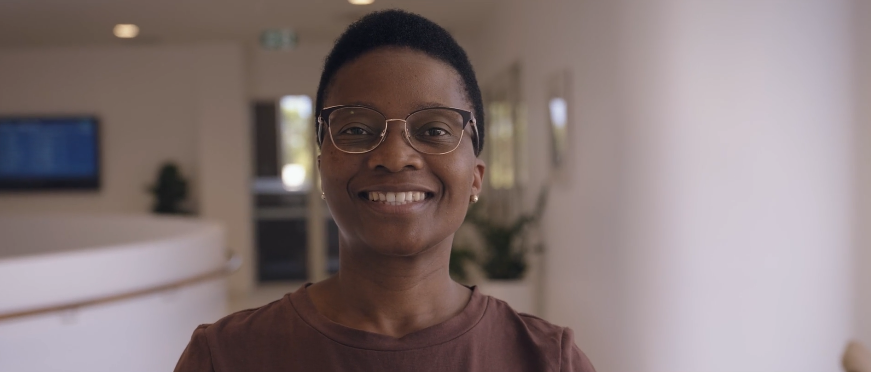
Evelyn is the Deputy Director of Clinical Services at Wyvern Private Hospital, a steady and principled leader who backs her staff, sees patients fully, and holds the line on standards without ever needing to raise her voice. She did not arrive here by accident.
She grew up in rural Zimbabwe in a family with very little. One of seven children, she lived in a village where girls were not expected to be educated, only to grow up, marry and raise children. But Evelyn’s parents thought differently. Despite severe financial constraints, they made a radical decision. They could afford to educate only one child, and they chose their daughter.
It was not because her brothers mattered less. It was because opportunity was scarce, the stakes were high, and Evelyn showed clear academic promise. Her parents chose to invest in possibility, backing her education.
From a young age, Evelyn told her mother she wanted a different life for her own children. It was not said with bitterness, but with unusual clarity. Even then, she understood that the future does not simply arrive, it has to be built.
After high school, she tried teaching, but it did not feel right. Nursing, however, became something much deeper than a profession. Her father had always said she would become a nurse, an idea she resisted. But when he died from a stroke when she was sixteen, the experience stayed with her. Even as a teenager, she could see what care might have changed, and nursing became a way to turn grief into purpose. By nineteen, she was training and quickly realised she loved the work.
As Zimbabwe’s economy worsened, Evelyn made another hard decision. She would not raise her children in that environment. Not because she did not love her country, but because she could not create safety, opportunity, or a stable future. She completed her registration, searched for sponsorship, and interviewed for roles in Australia, failing three times before finally getting a break.
A woman in Australia by the name of Marcia, who became her agent, saw something in her. She believed in Evelyn, sent out her CV again, helped her navigate the process, and even advanced her money so she could survive those first weeks. It was the first of several moments in Evelyn’s life when another woman recognised her potential and chose to act on it. Marcia was later also employed at Wyvern Private Hospital.
The future still came at a cost. When it was time to leave Zimbabwe, Evelyn had to leave her ten-year-old son behind until the paperwork could catch up. She was meant to arrive with $500 but did not have it. The day before she flew, her brother slipped her $100. So, in 2008, Evelyn landed in Australia with $100, no family waiting, a room booked in a lodge, and a job starting within days. On her first day, she walked most of the way to the hospital to save on bus fare. It was a precarious beginning, uncertain at times but made bearable by small acts of kindness she has never forgotten.
At Dalcross Hospital in Sydney, she found work that mattered and a culture that felt like family. Her leadership emerged not because she chased status, but because others recognised something steady and dependable in her. Another woman stepped forward: Anne Caroll, the General Manager of Dalcross. Impressed by Evelyn’s work ethic, she asked if there was any way she could help. Evelyn joked, “Yes, sponsor me.” Anne Caroll agreed on the spot, navigated the process, and even put the fees on her own credit card to make it happen.
Then another woman saw Evelyn’s potential. Anne Scott, then Ward Nursing Unit Manager at Dalcross worked with Evelyn for only a year before recognising her leadership potential and making her second in charge within a few months of working with her.
Later, after Dalcross was acquired and eventually closed, Evelyn moved to Sydney Adventist Hospital as a clinical Nursing unit manager. Years on, when Wyvern opened in 2024 as the new incarnation of Dalcross, Dr Bill Sears and Anne Scott invited her into the role of Deputy Director, bringing her back to work with many of the original team members she worked with when she first arrived in Australia.
Along the way, Evelyn faced the assumptions many women of colour know too well. Patients sometimes mistook her for the cleaner or the tea lady. She never shrank and never lashed out. She would simply and calmly say, “I’m Evelyn, and I’m the nursing manager. You asked to see me.” That type of response is the essence of her leadership: dignity, composure, and standards that do not bend under pressure.
Her convictions were shaped by more than ambition. At Sydney Adventist Hospital, Evelyn helped establish and grow a stroke unit. Stroke had taken both her father and, later, her mother, so this work was never abstract. She does not push for better care as an administrative exercise. She pushes because she knows exactly what is at stake. At Wyvern, stroke protocol has remained an important focus for the same reason.
On International Women’s Day, Evelyn’s story matters not because it fits a slogan, but because it shows what can happen when courage, sacrifice, and opportunity meet a woman determined to make them count. It also shows the power of women: a mother who backed her daughter, a stranger who opened a door, leaders who recognised talent, and a woman who has honoured every one of those acts of belief through the life she has built. That is worth celebrating.